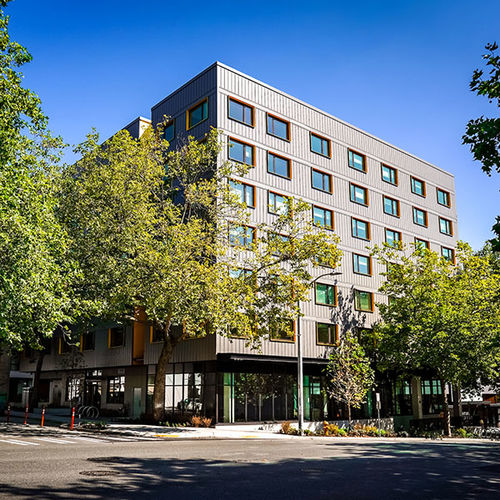


Downtown Bellevue has nearly 10,000 housing units and approximately 15,700 residents. It is also Bellevue's primary employment center, which creates a different daily rhythm from the residential neighborhoods surrounding it. People who live downtown share the streets with office workers during the week, shoppers and restaurant traffic in the evenings, and visitors coming into the city for events and entertainment.
For homebuyers considering Downtown Bellevue, the decision usually starts with that combination. You are choosing an urban neighborhood where housing, offices, restaurants, shopping, parks and transit are concentrated within a relatively small area.
After working with buyers and sellers throughout Bellevue for years, our team has also learned that "downtown" is not one uniform housing market. The location of a building within downtown can noticeably change the experience of living there.
What Kind of Homes Are in Downtown Bellevue?
Downtown Bellevue's housing is primarily apartments and condominiums rather than detached single-family homes.
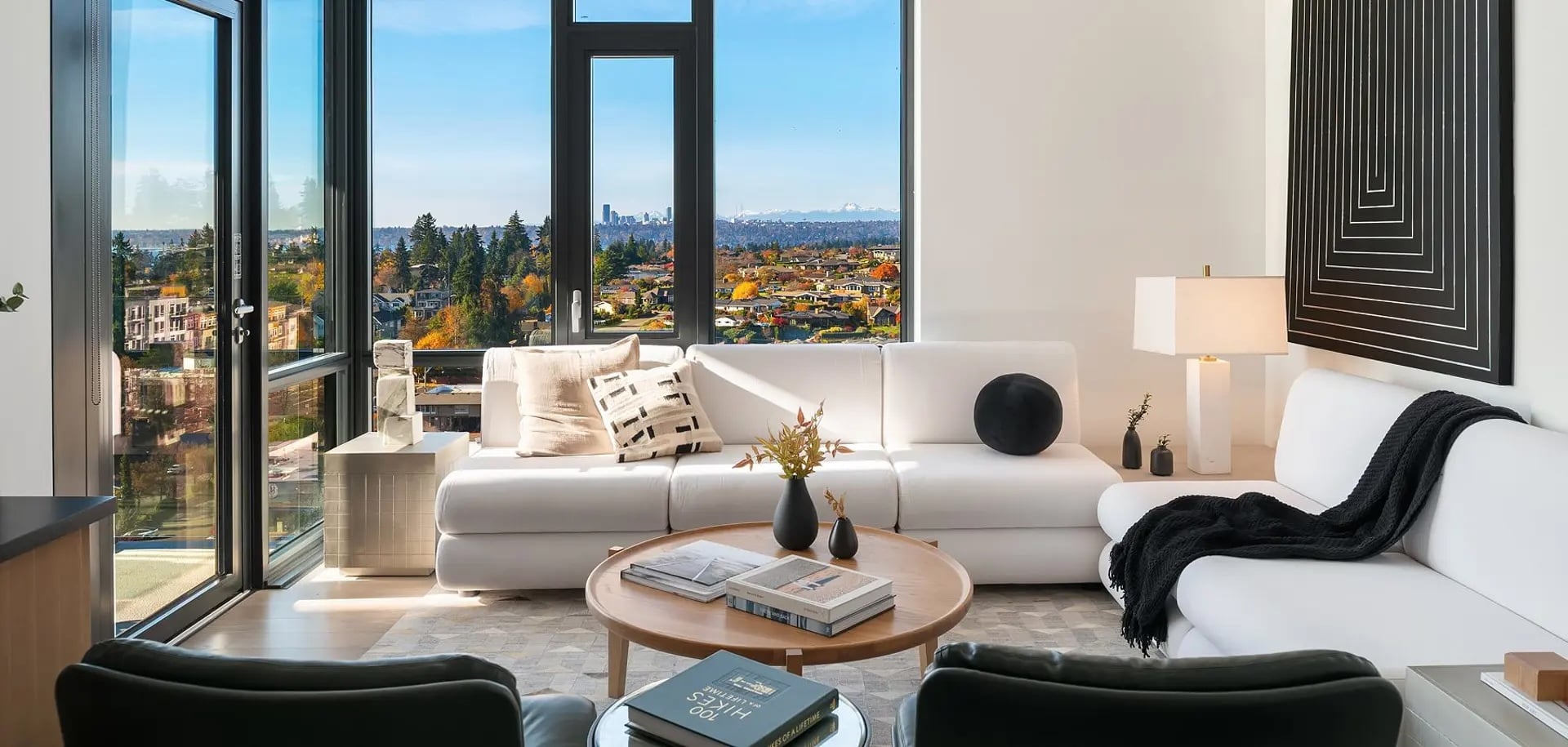
The residential inventory ranges from older condominium buildings and properties around Main Street to newer high-rise residences with concierge services, extensive amenities and views of Lake Washington, the Seattle skyline and the Olympic Mountains.
That range makes building selection an important part of a downtown home search.
Two condominiums within a few blocks of one another can have very different monthly homeowner association dues, parking arrangements, amenities, reserve funding, rental policies and building histories. Views and floor height can also create substantial differences between units within the same building.
For condominium buyers, we look beyond the unit itself. The financial health and management of the association, upcoming projects, assessments, insurance, reserves and governing documents are part of evaluating the property.
New construction continues to add another layer to the downtown market. The Bellevue Downtown Association tracks numerous residential projects either proposed, in review or moving through development. The City of Bellevue is also reviewing its downtown land-use rules in 2026 with continued housing development among its stated goals.
One current example is the planned repositioning of two Avenue Bellevue towers as Nobu Bellevue Residences, encompassing 365 luxury condominiums and a future Nobu restaurant.
For buyers, that continued development means the condominium market needs to be evaluated building by building rather than treating Downtown Bellevue as a single category.
Downtown Bellevue Changes From Block to Block
Bellevue Way and NE 8th Street form the busiest part of downtown. This is where large retail, office, hotel, dining and entertainment uses converge.
Bellevue Square, Lincoln Square and Bellevue Place form a major part of that core. For someone living nearby, restaurants, shopping, a movie theater, hotels and services can all be reached without getting into a car.
Move west toward Downtown Park and Old Bellevue, however, and the setting changes.
Main Street has smaller-scale storefronts and restaurants, and residential buildings sit closer to Bellevue Parks and the Lake Washington waterfront. Meydenbauer Bay Park is also accessible from this side of downtown.
On the eastern side of downtown, proximity to I-405 and the Bellevue Downtown light rail station changes the transportation equation.
These differences are significant when we are helping someone compare properties. A buyer who prioritizes immediate access to Bellevue Square may choose differently from someone who wants to walk to Main Street and Downtown Park or someone who expects to use light rail regularly.
A map can tell you that two buildings are six blocks apart. It does not necessarily tell you how differently those six blocks can function day to day.
What Can You Actually Walk To?
Walkability is one of Downtown Bellevue's clearest differences from most Eastside residential neighborhoods.
A downtown resident can potentially walk to groceries, restaurants, coffee, shopping, fitness facilities, offices, parks and entertainment. The City of Bellevue has deliberately incorporated pedestrian activity and open space into its downtown planning, and its current Downtown Livability 2.0 work continues that focus.
Downtown Park provides 21 acres of open space immediately west of the commercial core. Farther west, Meydenbauer Bay Park provides public access to Lake Washington, including waterfront paths, a beach and marina access.
The practical experience still depends on where you live.
Someone several blocks east of Bellevue Way will have a different walk to the waterfront than someone living near Main Street. Hills are part of the geography, particularly when moving between the Lake Washington shoreline and the higher portions of downtown. Major streets such as NE 8th also carry substantial vehicle traffic.
When a buyer tells us they want a "walkable" location, we need to know what they actually want to walk to. Work, restaurants, a park, transit and the waterfront can point the search toward different parts of downtown.
Light Rail Has Changed the Transportation Options
Bellevue Downtown Station gives residents direct access to Sound Transit's 2 Line.
That matters differently depending on someone's routine. A buyer commuting to an office within Downtown Bellevue may already be able to walk to work. Someone traveling between Bellevue and Redmond has another option. Regional light rail connections also make it possible to reach destinations outside Bellevue without relying exclusively on a car.
In 2026, a free Bellevue Light Rail Shuttle also began operating from Bellevue Downtown Station to destinations throughout the downtown core, including restaurants, hotels, offices, parks and shopping.
For buyers evaluating a downtown condominium, proximity to the station is now another property-specific consideration alongside parking.
Owning a car is still practical for many downtown residents, particularly for travel around the broader Eastside. But living downtown provides transportation choices that are not available in the same way in many of Bellevue's lower-density neighborhoods.
Parks Are Part of the Downtown Experience
Bellevue's downtown planning did not leave its major public spaces on the edge of the city.
Downtown Park sits directly beside the commercial and residential core. Its circular promenade, lawn, water feature and Inspiration Playground provide a substantial open space surrounded by condominium buildings, shops and restaurants.
Meydenbauer Bay Park extends that public-space network to Lake Washington.
This is one of the characteristics we think buyers should understand when comparing Downtown Bellevue with other urban centers. High-rise living here does not necessarily mean being separated from substantial outdoor space.
It does mean choosing the location carefully if access to those spaces is important to you.
Old Bellevue and the High-Rise Core Offer Different Experiences
Main Street and Old Bellevue deserve separate consideration during a downtown home search.
The area retains a smaller physical scale than the high-rise core around Bellevue Way and NE 8th. Restaurants and independent businesses line Main Street, while Downtown Park and Meydenbauer Bay are nearby.
Housing reflects some of that difference. Buyers can find condominiums and apartments in and around Old Bellevue without necessarily choosing the large-scale tower environment found elsewhere downtown.
Neither setting is inherently better. They solve different housing preferences.
Some buyers specifically want a newer high-rise, views, staffed amenities and immediate access to the commercial core. Others want to remain within walking distance of downtown destinations but prefer the scale and location around Main Street.
That distinction often becomes clearer after spending time on foot in both areas rather than simply touring individual properties.
What Should Buyers Look at Beyond the Condo?
Buying in Downtown Bellevue requires evaluating both the property and the building.
We look at the condition and features of the unit, but condominium ownership adds another set of questions: association finances, reserves, insurance, assessments, building maintenance, parking, storage, rental restrictions and planned capital projects.
Then there is the location itself.
What is immediately outside the building? How does traffic affect access? Where do guests park? How long does it actually take to walk to the places you expect to use regularly? Is nearby construction underway or proposed? Could future development affect a view?
Downtown Bellevue continues to add residential and mixed-use projects, and the Bellevue Downtown Association maintains an active development pipeline covering projects under construction, proposed and in review.
That makes future development part of the due diligence, particularly when a buyer is paying a premium for a specific exposure or view.
Is Downtown Bellevue the Right Fit for Your Home Search?
Downtown Bellevue works particularly well for buyers who want housing, employment, dining, shopping, parks and transportation concentrated in one part of the Eastside.
But choosing downtown is only the first decision.
The high-rise core, Main Street, Downtown Park, Meydenbauer Bay and the areas closer to I-405 and light rail each offer a different relationship to the city. Buildings also differ considerably in age, amenities, association structure and cost of ownership.
Those are the details we work through with buyers.
The Hao Dang Real Estate Team has represented buyers and sellers throughout Bellevue and the Eastside for years. If Downtown Bellevue is part of your search, we can help you compare not only the available homes, but the buildings, blocks and practical differences that determine what living there will actually be like.
Check out this article next